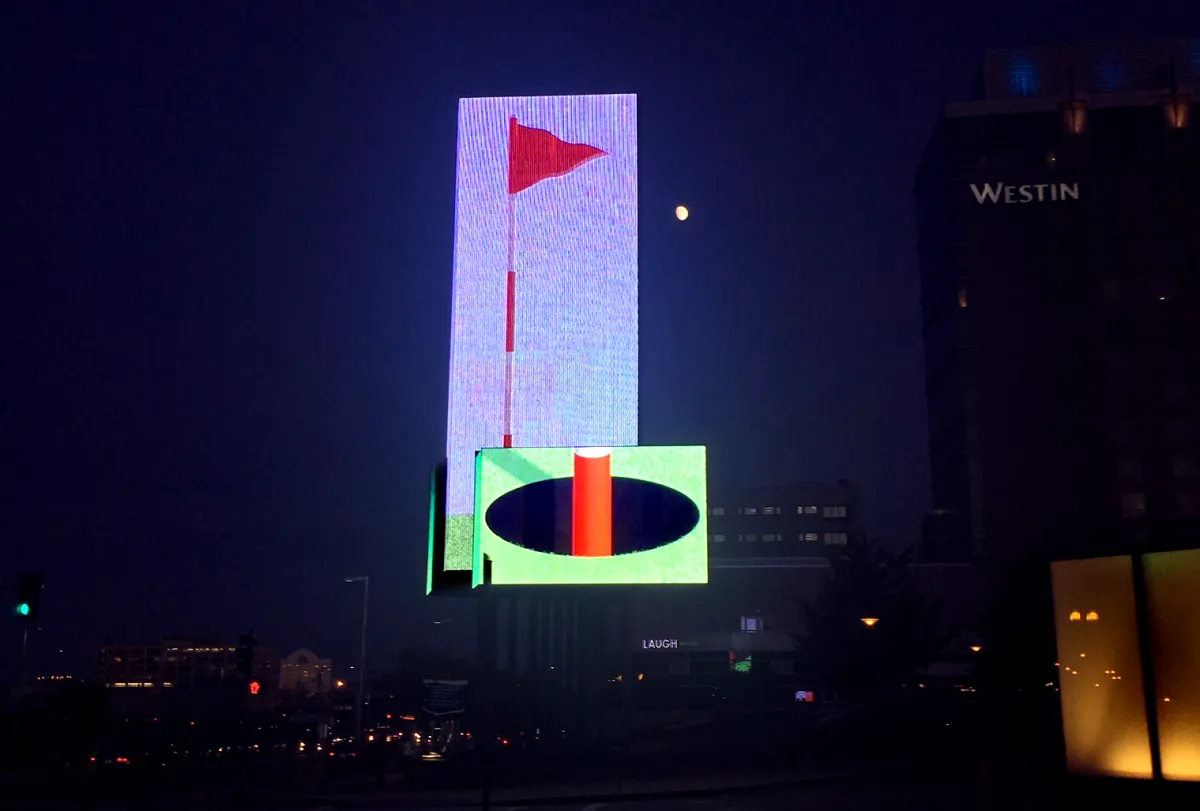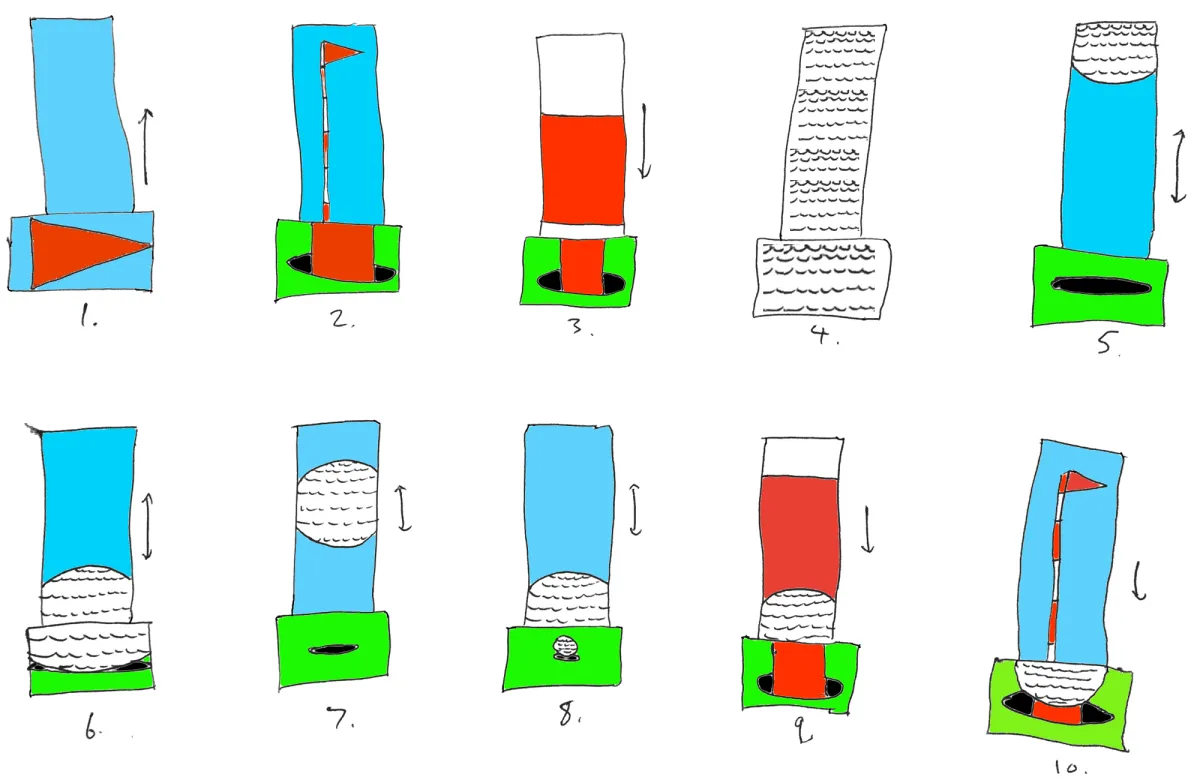
I was at the curator’s home when he invited me to submit a work for the 19th round of Art on the Marquee, a public art event held by the Massachusetts Convention Center Authority.
It was to be a short video for display on the titular 80-foot-tall marquee erected alongside the Boston Convention & Exhibition Center. I had a good idea that I thought would be a tap in.1
But it turned out we were staring at a muff.2 After four months of work and negotiations, the commission was banned from the marquee.
Now when it comes to video I’m a bit of a sand bagger.3 I’d taken one look at the marquee and pitched a little animation that was certain to fit its distinctive height and girth. I knew we’d hit the dance floor4 fast.
I got right to work setting up the scene and the camera angles in Unity, the program I use for my 3D work. The most important factor was that the ball had to bounce through the whole clip. (Actually, at least two and possibly as many as four balls were in the scene, but that’s neither here nor there.) Unity did a bang-up job simulating the physics of a golf ball, and we were filming in no time.
I always do everything I can to help a project get up.5 I knew this couldn’t just be an advertisement for the Unity program and the way it handles golf physics. Before I sent the clip off, I decided I should milk the grip6 a little.
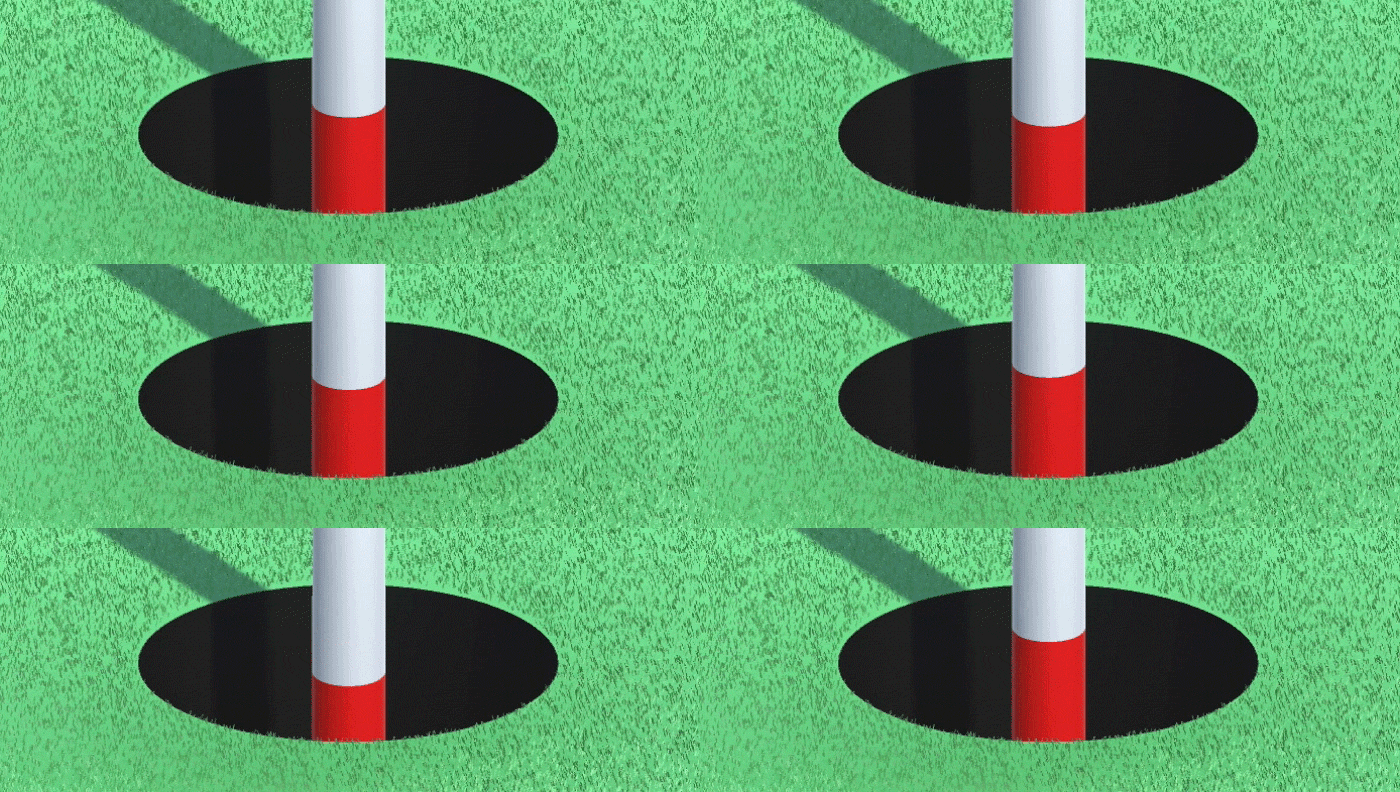
After an hour playing with the physics simulation, I realized that there are so many moving parts in golf. The ball isn’t the only thing in motion during the game. Trees wave in the wind, birds soar over the fairway, and men roll in their little carts. In fact, all these things can also bounce. The flag can bounce on the pole, the hair can bounce on the floor, and the hole can even bounce in the hole that holds the hole.7
I didn’t want this to be a stretch, so I just put some bounce on the flagpole. Pole, after all, rhymes with hole. A little bit of wordplay never hurt anybody.